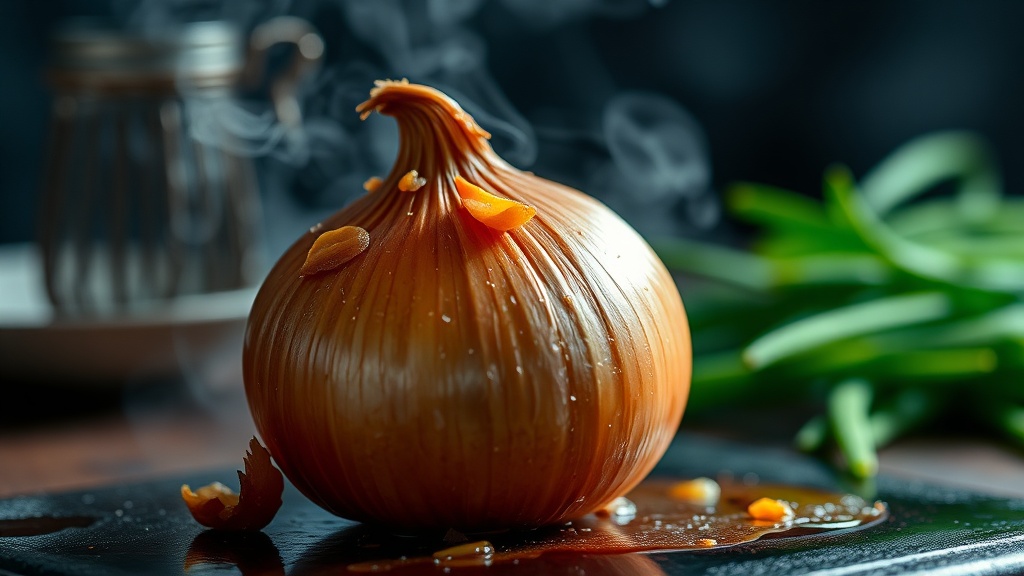
Transforming the Humble Onion: Achieving Deep, Sweet Caramelization Every Time

Why do home cooks so often struggle to achieve genuinely rich, sweet caramelized onions, rather than just soft, slightly browned ones?
It’s a common culinary frustration, isn't it? That deep, burnished sweetness you taste in restaurant dishes—french onion soup, gourmet burgers, savory tarts—often feels elusive in a home kitchen. You start with good intentions, but somewhere between the initial chop and the final stir, the onions just… brown. Not *caramelize*. This isn't about simply cooking onions until they're soft; it's about unlocking a profound depth of flavor through a process that's both simple in concept and nuanced in execution. This guide cuts through the guesswork, offering clear, actionable steps to turn ordinary onions into an extraordinary ingredient. We’ll explore the science at play, the foundational techniques, and the patience required to transform those pungent layers into something truly remarkable, adding a complex sweetness to virtually any savory dish.
What makes onions turn from sharp to wonderfully sweet?
The magic behind truly caramelized onions lies in two distinct chemical reactions: caramelization and the Maillard reaction. While often conflated, they work in concert to create that irresistible flavor profile. Caramelization, in its purest form, is the pyrolysis of sugar—essentially, heating sugars to a high enough temperature (around 330°F or 165°C) that they begin to break down and reform into new, flavorful compounds. Onions are naturally rich in various sugars, including fructose, glucose, and sucrose, which contribute to this process. As these sugars cook slowly, they polymerize, producing hundreds of new compounds responsible for the complex sweet, nutty, and slightly bitter notes we associate with caramel.
Simultaneously, the Maillard reaction is at work. This is a non-enzymatic browning reaction between amino acids and reducing sugars, typically occurring at temperatures between 280°F and 330°F (140°C and 165°C). It’s the same reaction that browns seared steaks, toasted bread, and roasted coffee beans. For onions, the Maillard reaction contributes savory, meaty, and even umami notes, adding another layer of complexity to the developing flavor. Without both reactions—driven by consistent, moderate heat and sufficient time—you’d end up with either merely softened onions or, worse, burnt, bitter ones. Understanding this dual process is the first step to mastering the technique, allowing you to appreciate *why* patience is such a critical ingredient here. For a deeper dive into these fascinating chemical transformations, an excellent resource can be found at