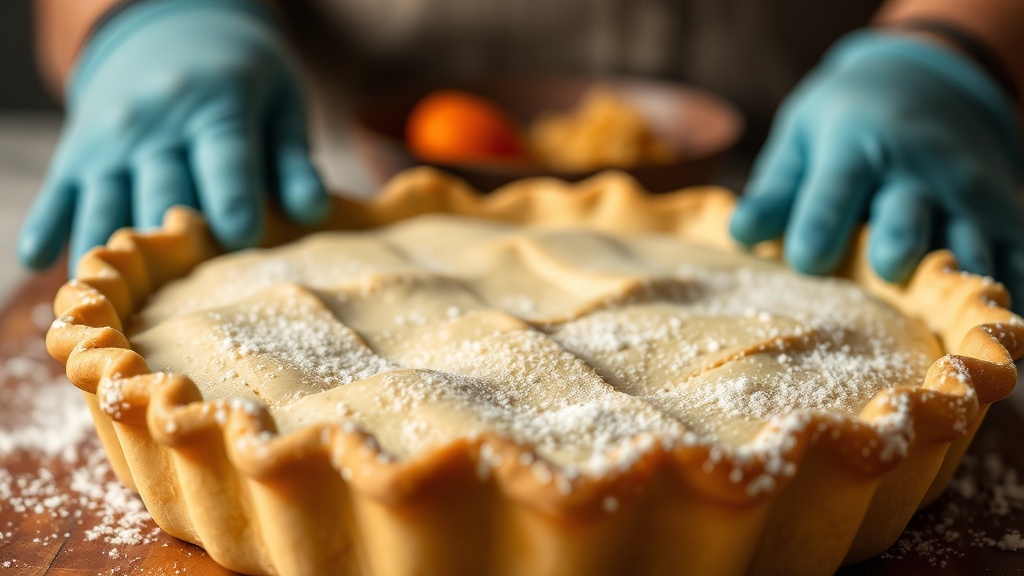
The Secret to Perfectly Flaky Pie Crust

Quick Tip
Keep your fats and water ice-cold to create steam pockets that lift the dough layers.
Most people think a bad pie crust is the fault of a bad recipe, but it's actually a matter of temperature control. This post breaks down the physics of fat and water to help you achieve those sought-after, shatteringly crisp layers every single time.
How Do You Get Flaky Pie Crust?
The secret to a flaky crust is keeping your fat in solid, pea-sized chunks rather than melting it into the flour. When those tiny bits of cold butter or lard hit the hot oven, they create steam—and that steam is what pushes the dough layers apart to create flakes. If the fat melts into the flour before it hits the oven, you'll end up with a tough, crumbly texture instead of a flaky one.
I highly recommend using Kerrygold Unsalted Butter for its high fat content and consistent texture. If you prefer a more traditional, flaky texture, even a bit of Lurpak or a high-quality lard works wonders.
Here is the breakdown of how different fats behave during the baking process:
| Fat Type | Resulting Texture | Best For |
|---|---|---|
| Cold Unsalted Butter | Maximum Flakiness | Fruit Pies & Tarts |
| Vegetable Shortening | Consistent & Soft | Beginner Bakers |
| Lard/Leaf Lard | Extremely Tender | Traditional Savory Pies |
Why Does Temperature Matter So Much?
Temperature matters because heat is the enemy of gluten development and fat stability. If your hands are too warm, or if you're working in a hot kitchen, the fat will coat the flour particles and create a greasy dough. This is why many professional bakers suggest chilling your flour and even your mixing bowl in the fridge before you start. (Trust me, it makes a massive difference.)
You can read more about the science of dough stability on the Wikipedia page for shortcrust pastry to understand the chemistry at play. It's not just magic—it's thermodynamics.
What Are The Best Tools For Pie Making?
You don't need a professional kitchen to make professional pastry, but a few specific tools help ensure you don't overwork the dough. Overworking leads to excess gluten, which results in a "tough" crust that resists a knife.
- A Pastry Cutter: Perfect for cutting cold butter into flour without melting it.
- A Bench Scraper: Helps move the dough without adding too much hand heat.
- A Digital Scale: Measuring by weight is far more accurate than using volume cups.
If you're looking to experiment with more complex textures, you might enjoy exploring forgotten ferments from around the globe, which also rely heavily on precise temperature and time. Baking is a science, but it's a delicious one.
Stop by the kitchen, grab some cold butter, and give this a shot. Your next apple pie deserves better than a soggy bottom.