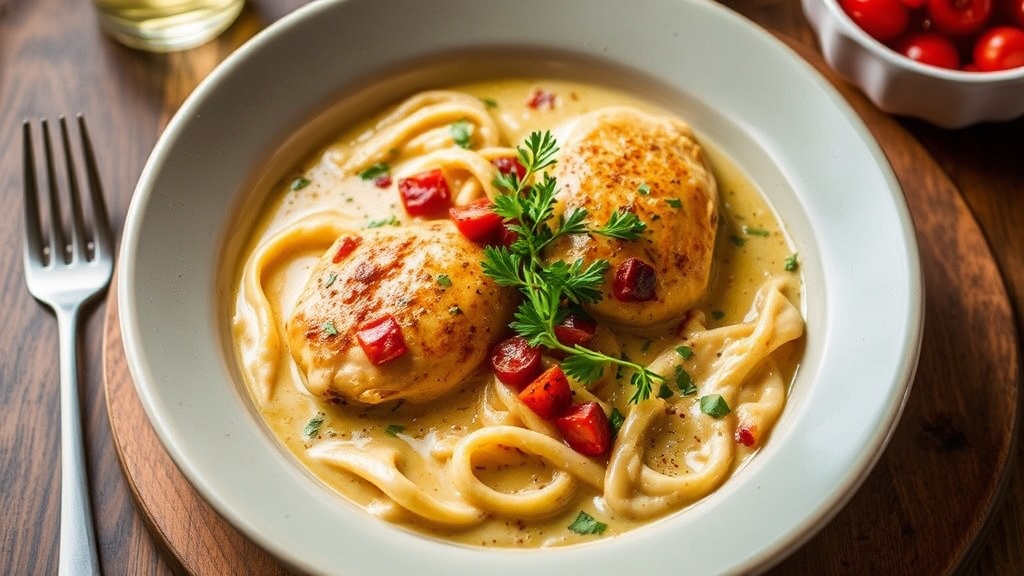
One-Pot Creamy Tuscan Chicken: A Weeknight Dinner Winner

This post covers everything needed to make one-pot creamy Tuscan chicken at home — from ingredient selection and step-by-step instructions to storage tips and wine pairings. You'll learn why this dish has become a weeknight staple for busy cooks who refuse to sacrifice flavor for convenience. No complicated techniques. No mountain of dishes. Just tender chicken, a silky cream sauce, and the kind of meal that earns repeat requests from family members.
What Is Tuscan Chicken and Why Does Everyone Love It?
Tuscan chicken is a creamy skillet dish featuring seared chicken breasts simmered in a garlic-Parmesan cream sauce with sun-dried tomatoes and spinach. The combination delivers restaurant-quality results in under 40 minutes using a single pan.
The appeal isn't complicated. Most home cooks have stood at the sink after dinner wondering how three pots, two cutting boards, and that weird utensil nobody uses all ended up in the pile. One-pot meals eliminate that entirely. Everything happens in a single skillet — searing, simmering, sauce-making, even the vegetable wilt if you're strategic about timing.
The "Tuscan" label refers to the flavor profile rather than strict regional authenticity. Sun-dried tomatoes, garlic, Italian herbs, and cream form the backbone. Some versions add white wine. Others swap spinach for kale. The constants are that velvety sauce and the golden-crusted chicken waiting underneath.
Here's the thing: this isn't diet food. Heavy cream, butter, and Parmesan create a sauce that coats the back of a spoon. That said, the richness means smaller portions satisfy. Serve it over pasta, mashed potatoes, or with crusty bread for sopping up every drop.
What Ingredients Do You Actually Need?
The ingredient list stays short and supermarket-friendly — chicken breasts, heavy cream, sun-dried tomatoes, fresh spinach, garlic, Parmesan cheese, chicken broth, butter, and basic pantry seasonings.
| Ingredient | Amount | Notes |
|---|---|---|
| Boneless chicken breasts | 1.5 lbs (4 pieces) | Pounded to even thickness |
| Heavy cream | 1 cup | Don't substitute half-and-half |
| Sun-dried tomatoes | 1/2 cup, drained | Oil-packed have better flavor |
| Fresh baby spinach | 3 cups | Wilt down significantly |
| Garlic | 4 cloves | Minced fine |
| Parmesan cheese | 1/2 cup, grated | Freshly grated melts better |
| Low-sodium chicken broth | 1/2 cup | Deglazes the pan |
| Unsalted butter | 2 tablespoons | For searing |
| Italian seasoning | 1 teaspoon | Or dried basil + oregano |
| Red pepper flakes | 1/4 teaspoon | Optional heat |
Worth noting: the sun-dried tomatoes matter more than you'd think. Dry-packed versions (the kind that feel like leather) require rehydrating and lack the depth of oil-packed varieties. Bon Appétit explains the difference — oil-packed tomatoes carry residual herb and garlic flavors from their jar, adding complexity without extra work.
Heavy cream isn't negotiable. Half-and-half separates when simmered. Whole milk curdles. If you're committed to lighter dairy, coconut cream works surprisingly well — though the dish takes on a faint tropical note that some love and others find jarring.
How Do You Make Creamy Tuscan Chicken Without Drying Out the Meat?
Sear the chicken in a hot skillet until golden, then remove it while building the sauce — returning it only at the end to warm through. This two-stage method prevents the overcooked, rubbery texture that ruins so many cream-based chicken dishes.
Start with room-temperature chicken. Cold meat hitting a hot pan seizes up and cooks unevenly. Pat the breasts dry with paper towels — moisture is the enemy of browning. Season generously with salt and pepper right before cooking.
Heat your largest oven-safe skillet (a Lodge 12-inch cast iron or quality stainless steel pan works perfectly) over medium-high heat. Add butter and wait until it stops foaming. The chicken should sizzle immediately upon contact. If it doesn't, the pan isn't hot enough.
Cook undisturbed for 5-6 minutes per side. Resist the urge to peek. The crust develops through uninterrupted contact with the hot surface. You're looking for deep golden-brown coloring, not pale beige. Transfer cooked chicken to a plate — it'll finish later in the sauce.
In the same pan (don't wipe it out — those brown bits are flavor gold), sauté garlic for 30 seconds until fragrant. Add sun-dried tomatoes and cook another minute. Deglaze with chicken broth, scraping up every stuck-on bit with a wooden spoon. Pour in heavy cream and Parmesan, stirring until the cheese melts completely. The sauce should thicken enough to coat a spoon — this takes 3-4 minutes of gentle simmering.
Now comes the critical timing. Return chicken to the skillet, nestling it into the sauce. Spoon liquid over the top. Add spinach by the handful — it'll look like too much but collapses dramatically. Cover and simmer just until spinach wilts and chicken reaches 165°F internally, about 3-5 minutes. Any longer and that cream breaks, turning oily and grainy.
Common Mistakes That Ruin the Dish
- Overcrowding the pan: Cook in batches if needed. Crowded chicken steams instead of sears.
- Boiling the cream: Vigorous bubbling causes separation. Gentle simmer only.
- Adding cold dairy: Room-temperature cream incorporates more smoothly.
- Skipping the rest: Let the finished dish sit off-heat for 3 minutes. Sauce thickens, flavors meld.
What Should You Serve With Creamy Tuscan Chicken?
Starch is non-negotiable — the sauce demands something absorbent. Buttered egg noodles, creamy mashed potatoes, or crusty sourdough bread all work beautifully. For lighter options, try cauliflower mash or roasted asparagus.
Pasta pairing follows classic logic. Wide pappardelle catches the sauce in its folds. Rigatoni's ridges grip every drop. Even simple spaghetti works in a pinch — though the sauce-to-pasta ratio skews better with shorter shapes.
Vegetable sides should cut through the richness, not compete with it. Lemon-dressed arugula salad provides bright acidity. Roasted broccolini with lemon zest and red pepper flakes adds texture contrast. Garlic bread — while admittedly excessive — makes excellent sense for the dedicated sauce-lover.
Wine Pairing Suggestions
Full-bodied whites complement the cream without disappearing. Unoaked Chardonnay (think Burgundian styles from Chablis) provides enough acidity to refresh the palate between bites. Pinot Grigio works for those who prefer lighter wines — though something with a bit more weight (like a Soave Classico) holds up better.
The catch? If you're cooking with wine, match your drinking wine to what goes in the pan. Adding a $4 cooking wine and sipping something decent creates jarring flavor discontinuity. That said, the dish works perfectly well without wine — just increase the chicken broth slightly.
Can You Make Creamy Tuscan Chicken Ahead of Time?
Yes, with modifications. The sauce and chicken keep separately for 3 days refrigerated, but the finished dish doesn't freeze well — cream-based sauces separate and turn grainy upon thawing.
For meal prep success: cook the chicken completely, cool rapidly, and store in an airtight container. Prepare the sauce separately, stopping just before adding spinach. Refrigerate both components. When ready to serve, reheat sauce gently, wilt fresh spinach into it, then add sliced chicken just to warm through. The texture stays significantly better than reheating the completed dish.
Leftovers (if you're lucky enough to have them) reheat best on the stovetop over low heat. Microwave reheating works in 30-second bursts, stirring between each, but tends to overcook the chicken edges. Add a splash of chicken broth or cream to revive sauce consistency — refrigerated cream sauces thicken substantially.
Variations Worth Trying
Once you've mastered the base recipe, modifications come easily. Swap chicken breasts for thighs — they stay juicier and add deeper flavor. Double the sun-dried tomatoes and add a tablespoon of their oil to the sauce for extra intensity. Stir in a cup of halved cherry tomatoes during the last few minutes for fresh bursts of acidity against the creamy backdrop.
Protein alternatives work too. Salmon fillets cook faster — add them to the finished sauce for just 4-5 minutes. Shrimp need even less time, 2-3 minutes until pink and curled. For vegetarian versions, thick slices of king oyster mushrooms sear beautifully and provide meaty texture.
Cheese experiments yield interesting results. Aged Asiago brings nuttiness that complements the tomatoes. Pecorino Romano adds welcome saltiness — reduce added salt accordingly. Fontina creates an almost fondue-like consistency that coats everything luxuriously.
"The best weeknight recipes are the ones you memorize. After three times making this, you'll stop measuring. After six, you'll start improvising. That's when a recipe truly becomes yours."
The beauty of one-pot creamy Tuscan chicken lies in its reliability. Long day at work? Unexpected dinner guests? Refrigerator looking sparse? This dish transforms basic ingredients into something that feels intentional and indulgent. The technique is forgiving. The cleanup is minimal. And that sauce — spooned over whatever starch you've got, mopped up with bread, eaten straight from the pan when nobody's watching — makes the kind of impression that brings people back to your table.