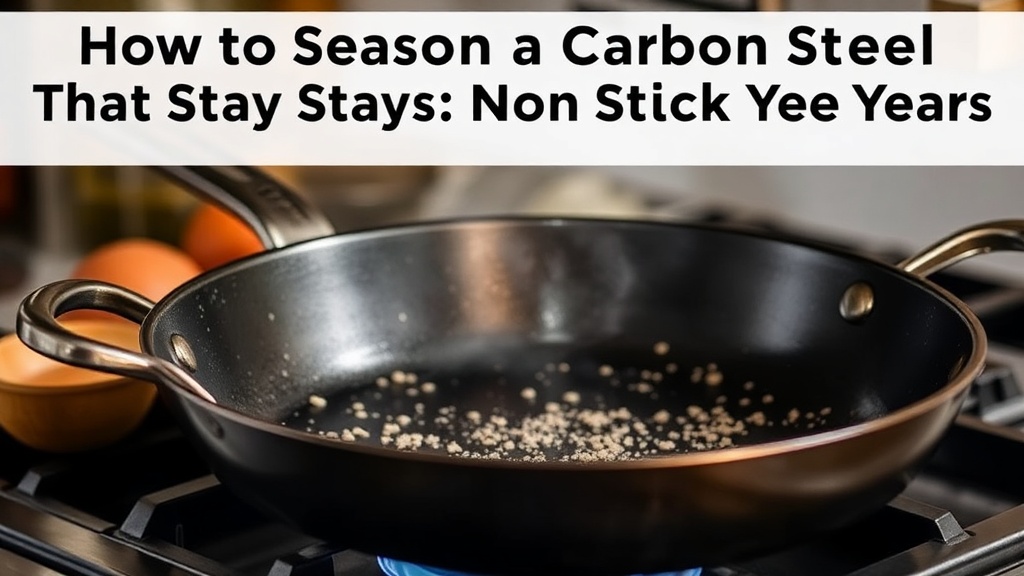
How to Season a Carbon Steel Pan That Stays Non-Stick for Years

Most home cooks throw away their non-stick pans every three to five years—spending hundreds of dollars over a lifetime on cookware that degrades with every meal. A properly seasoned carbon steel pan, by contrast, can develop a slick, polymerized surface that lasts decades and actually improves with use. The secret isn't expensive equipment or complicated chemistry—it's understanding how heat, oil, and time work together to build a natural, durable coating that rivals any factory-applied finish.
Why Does My Carbon Steel Pan Stick After Seasoning?
If you've tried seasoning before and ended up with splotchy patches, sticky residue, or food that clings stubbornly to the surface, you're not alone. The most common mistake involves applying too much oil and not heating it long enough. When oil pools instead of polymerizing—that chemical process where fat molecules cross-link and bond to the metal—you get a gummy, uneven surface that catches food rather than releasing it.
Carbon steel contains about 1% carbon, making it harder than cast iron but more responsive to temperature changes. This responsiveness is both its superpower and its challenge. The metal expands and contracts as it heats and cools, which can crack poorly formed seasoning layers. The goal isn't to create a thick shell but a thin, hard layer that flexes with the pan.
Start with a completely bare pan. If yours came with a factory coating (often beeswax or mineral oil to prevent rust), scrub it off with hot soapy water and a scouring pad. Yes, soap—this is the only time you'll use it on this pan. Dry the pan immediately and thoroughly. Any remaining moisture will turn to steam during seasoning and create bubbles in your coating.
What's the Best Oil for Seasoning Carbon Steel?
Not all cooking oils season equally well. You want an oil with a high concentration of unsaturated fats—they polymerize more effectively than saturated fats. Flaxseed oil has gained popularity because it creates an extremely hard surface, but it's also brittle and prone to flaking. Many professionals prefer grapeseed oil or refined sunflower oil for their balance of polymerization and durability.
Avoid extra virgin olive oil and butter for initial seasoning. Their smoke points are too low, and they contain compounds that don't polymerize cleanly. You're looking for clean, light oils that can withstand high heat without breaking down into acrid smoke.
The technique matters more than the specific oil choice. Pour about a teaspoon of oil into your warm pan—just enough to create a whisper-thin film when spread with a paper towel. Wipe it as if you're trying to remove all the oil. There should be no visible pooling, no shiny spots, no drips. The pan should look almost dry. This is counterintuitive, but excess oil is your enemy here.
How Hot Should the Oven Be for Seasoning Carbon Steel?
The oven method provides the most even results for new pans. Preheat to 450°F (232°C)—hot enough to push the oil past its smoke point and trigger polymerization, but not so hot that the oil burns and creates carbonized, flaky patches. Place your oil-wiped pan upside down on the middle rack, with a sheet of aluminum foil on the rack below to catch any drips.
Bake for one hour, then turn off the oven and let the pan cool completely inside. This slow cooling prevents thermal shock and allows the seasoning layer to set properly. The first layer will look thin and slightly golden—not the deep black of a well-used pan. That's normal. You're building foundations here, not a finished house.
Repeat this process three to five times for a new pan. Each layer bonds to the one beneath it, creating a cumulative surface that becomes progressively more non-stick. You can't rush this with higher heat or thicker oil—it'll just flake off later when you're trying to flip an omelet.
Stovetop seasoning works too, especially for touch-ups. Heat the pan over medium-high until a drop of water dances across the surface (the Leidenfrost effect). Remove from heat, add your thin oil film, wipe thoroughly, then return to heat until it stops smoking. The stovetop method gives you less even coverage than the oven but is perfect for maintaining established seasoning.
How Do I Cook in a Newly Seasoned Carbon Steel Pan?
The first six months with a carbon steel pan are a relationship-building phase. The seasoning is young and vulnerable. Start with high-fat cooking—bacon, sausages, fried eggs with plenty of butter. These foods deposit additional fat that supplements your base seasoning while the polymerized layer hardens fully.
Avoid acidic foods like tomatoes, wine reductions, or citrus pan sauces during this break-in period. Acid strips young seasoning aggressively. Wait until your pan has developed that deep, glossy black patina—usually after several months of regular use—before deglazing with vinegar or simmering tomato sauce.
Preheating technique matters enormously. Cold oil in a cold pan leads to sticking. Heat your empty pan for two to three minutes over medium heat, then add oil and wait another thirty seconds until it shimmers. This creates a thermal barrier between food and metal. When you add protein, let it cook undisturbed until it releases naturally. If it's stuck, it's not ready to flip.
Water is the other major threat to young seasoning. Never soak your carbon steel pan. After cooking, while the pan is still warm, wipe it with a paper towel to remove residue. For stubborn bits, use a chainmail scrubber or coarse salt with a paper towel. Rinse briefly under hot water if needed, dry immediately on the stovetop over low heat, and apply a microscopically thin layer of oil while the pan is still warm.
The maintenance rhythm becomes automatic after a few weeks. Cook, clean while warm, dry thoroughly, oil lightly. Your reward is a cooking surface that responds instantly to temperature adjustments, develops its own unique cooking characteristics, and potentially outlasts your cooking career.
Can I Fix Patchy or Flaking Seasoning?
Yes—and you will need to eventually. Even with perfect technique, carbon steel seasoning wears unevenly. High-heat searing areas develop thicker, darker patina while sides may stay lighter. This patchiness is cosmetic, not functional. The pan still cooks beautifully.
When you notice actual flaking—thin, translucent sheets peeling from the surface—it's time for intervention. Scrub the affected area with a scouring pad to remove loose seasoning, then re-season just that spot using the stovetop method. The new seasoning will blend with the old within a few cooking sessions.
Total seasoning failure (rust spots, severe sticking everywhere) requires a reset. Scrub the pan back to bare metal with steel wool or a vinegar soak for heavy rust, then start the seasoning process from scratch. It's labor-intensive but resets the clock on a pan that could last generations.
Carbon steel demands more attention than Teflon, but it returns that investment with interest. The seasoning you build becomes yours—a record of every meal cooked, every technique learned, every mistake corrected. Unlike disposable non-stick, this pan improves with age and develops character no factory can replicate. That's worth a little extra care.