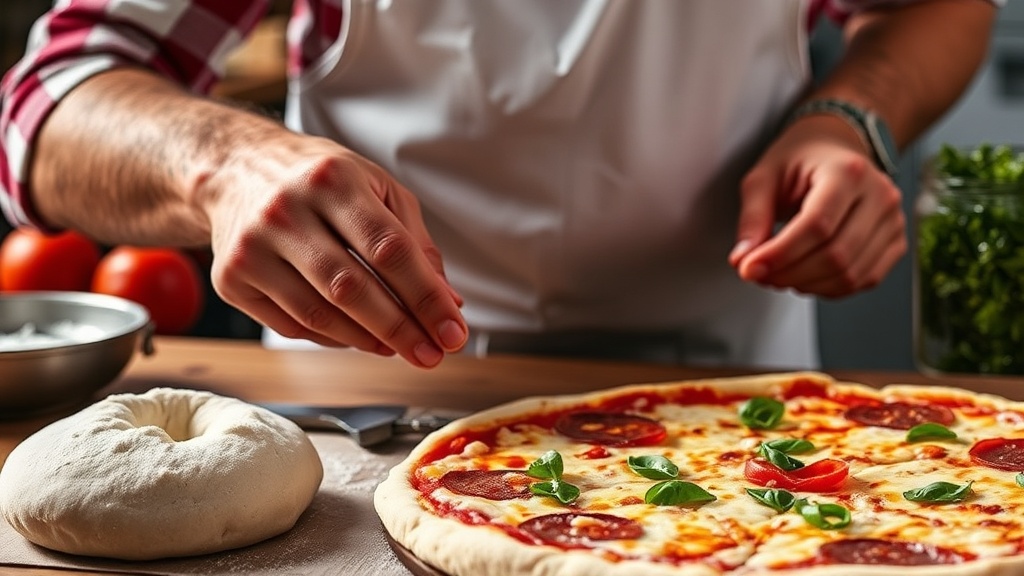
How to Make Perfect Homemade Pizza Dough from Scratch

Perfect homemade pizza starts with the dough. This guide walks through mixing, kneading, fermenting, and shaping pizza dough from scratch — the same technique used in pizzerias across Montreal's Little Italy. Whether the goal is a thin, crispy Neapolitan-style base or a chewy, foldable New York slice, mastering the fundamentals means better pizza at a fraction of the cost of delivery. No stand mixer required.
What ingredients do you need for homemade pizza dough?
You only need four basic ingredients: flour, water, salt, and yeast. That's it. Some recipes call for olive oil or sugar, but purists — and most pizza shops on Boulevard Saint-Laurent — stick to the classic quartet. For flour, King Arthur Bread Flour delivers reliable results with its higher protein content. Water should be lukewarm — around 105°F — to wake up the yeast without killing it. Kosher salt (Diamond Crystal is the standard in most test kitchens) provides clean flavor, and instant yeast (SAF Red Label) keeps things simple since it doesn't need blooming in water first.
Here's the thing: ingredient quality matters more than ingredient quantity. A bag of stale all-purpose flour from the back of the pantry won't produce the same elastic, flavorful dough as fresh bread flour. For Neapolitan-style pizza, Caputo Tipo 00 flour — milled finer than standard American flour — creates that signature soft, pillowy crust. You can find it at Italian grocery stores in Montreal's Mile End or order from King Arthur Baking.
What's the difference between bread flour and all-purpose flour for pizza dough?
Bread flour contains more protein — typically 12-14% versus 10-12% in all-purpose — which develops stronger gluten and produces a chewier, more structured crust. The choice depends entirely on the style of pizza you're after.
| Flour Type | Protein Content | Best For | Texture Result |
|---|---|---|---|
| Bread Flour (King Arthur) | 12.7% | New York-style, Detroit-style | Chewy, structured, holds toppings well |
| All-Purpose Flour (Gold Medal) | 10-11% | Thin-crust, flatbread-style | Tender, less chew, cracker-like when rolled thin |
| 00 Flour (Caputo) | 12.5% | Neapolitan, wood-fired | Soft, airy, leopard-spotted cornicione |
| Whole Wheat (Bob's Red Mill) | 13-14% | Health-focused variations | Dense, nutty — best blended 50/50 with bread flour |
That said, don't overthink it. If all-purpose is what's in the cupboard, the pizza will still taste better than anything from a cardboard box. The catch? You might need to knead a minute or two longer to develop enough strength in the dough, and the crust won't have quite the same chew.
How do you knead pizza dough properly?
Knead by pushing the dough away with the heel of your hand, folding it back over itself, and giving it a quarter turn — repeat for 8 to 10 minutes until the dough feels smooth and springs back when poked. It should pass the "windowpane test": stretch a small piece thin enough that light passes through without tearing.
If you've got a stand mixer, a KitchenAid Artisan with the dough hook attachment cuts kneading time to about 5 minutes on medium-low speed. Don't walk away — over-kneaded dough becomes tough and rubbery. (The windowpane test saves you from that particular disappointment.) Mix on speed 2, no higher, or you'll risk overheating the dough and killing the yeast.
Worth noting: dough temperature matters. If the kitchen is warm — above 75°F — the dough will soften and stick more. Dust your hands with flour sparingly; too much and you'll throw off the hydration ratio. A bench scraper (the OXO Good Grips model works well) keeps things tidy and helps fold the dough without adding extra flour. If the dough sticks to the counter, scrape it up — don't sprinkle more flour.
Why does pizza dough need to rise, and for how long?
Rising — called fermentation — allows yeast to produce carbon dioxide and alcohol, which create air pockets, develop flavor, and relax the gluten so the dough stretches without snapping back. For same-day dough, let it rise at room temperature for 1 to 2 hours until doubled in size. For the best flavor, cold-ferment in the refrigerator for 24 to 72 hours.
The longer the fermentation, the more complex the taste. That slightly sour, nuanced flavor in your favorite pizzeria's crust? It comes from slow, cold fermentation — not from adding sugar or oil. Transfer the dough to the fridge after the initial room-temperature rise, or mix it and refrigerate immediately in an oiled container (a Rubbermaid Brilliance food storage container works perfectly). Just make sure the lid isn't airtight — gases need to escape.
Divide the dough into balls before refrigerating — 250g for a 12-inch pie is standard. When you're ready to bake, pull the dough out 2 hours ahead and let it come to room temperature. Cold dough fights back. It tears, it shrinks, and it makes the whole process miserable. Place the dough balls on a lightly floured tray and cover them so they don't dry out.
What's the best way to stretch pizza dough without tearing it?
Press the dough ball flat with your fingertips, working from the center outward and leaving a thicker border for the crust — then pick it up and let gravity do the work, rotating it slowly as it stretches. Never use a rolling pin unless the goal is a cracker-thin crust; rolling pushes out all the air bubbles you've spent hours developing.
If the dough keeps shrinking back, it needs more rest. Cover it with a damp kitchen towel and walk away for 10 minutes. The gluten needs a break — it's not ready to cooperate yet. (Patience here pays off. A rested dough stretches like silk; an impatient pull leaves holes and thin spots that burn in the oven.)
For New York-style pizza, aim for a 12- to 14-inch round. Neapolitan pies run smaller — 10 to 11 inches — with a pronounced puffy edge called the cornicione. Transfer the stretched dough to a peel dusted with semolina flour (Bob's Red Mill makes a good one) so it slides smoothly into the oven. No peel? An inverted half-sheet pan lined with parchment works in a pinch, though you'll sacrifice some bottom crispness.
How hot should the oven be for homemade pizza?
As hot as possible — 500°F to 550°F on a standard home oven, which means cranking the dial to its maximum and preheating for at least 45 minutes with a Baking Steel or Lodge cast iron pizza pan inside. Commercial pizzerias run wood-fired ovens at 800°F to 900°F, but home equipment has limits. You need to compensate with time and surface mass.
The Baking Steel (a 3/8-inch or 1/2-inch slab of solid steel) conducts heat faster than a ceramic pizza stone, giving you a crispier bottom in less time. Preheat it on the top rack — closer to the broiler — and switch the broiler on for the last 2 minutes of baking to char the crust and melt the cheese properly. Serious Eats testing found that steel outperformed stone in nearly every blind tasting, and America's Test Kitchen reached the same conclusion in their equipment reviews.
Here's the thing about sauce and toppings: less is more. A thin layer of crushed San Marzano tomatoes — Cento is widely available — spread to within an inch of the edge prevents soggy centers. Mozzarella (whole-milk, low-moisture from Galbani or Polly-O) gives that perfect pull without drowning the pie in water. Fresh mozzarella is delicious but too wet for high-heat, short-bake pizzas — save it for Margheritas baked in an Ooni Koda or similar outdoor oven where the intense heat evaporates moisture instantly.
Bake time at 550°F runs 7 to 10 minutes. Watch for the leopard-spotted crust and bubbling cheese. Rotate the pizza halfway through if your oven has hot spots — most do. And resist the urge to open the oven door constantly; you're letting heat escape every time. The crust should sound hollow when tapped on the bottom.
Once out, let the pizza rest for 2 minutes on a wire cooling rack before cutting. That rest allows the cheese to set and the steam to escape — otherwise the slices slide apart and the crust softens from trapped moisture. A Roccbox pizza wheel or a sharp chef's knife (the Wüsthof Classic 8-inch) makes clean cuts without dragging toppings across the pie.
Leftover dough? Freeze the portioned balls individually in freezer bags for up to 3 months. Thaw overnight in the refrigerator, then bring to room temperature before stretching. The yeast goes dormant in the freezer but wakes up just fine — the flavor actually improves with the extra cold time. Label the bags with the date; frozen dough is easy to forget.
Slice with confidence. A dull blade drags cheese and toppings — a sharp pizza wheel or bench scraper makes the cut in one clean motion. The first pie might not be perfect (the dough might tear, the shape might look like a map of an unknown country), but the fifth one will be. And the tenth? That one's dinner party worthy — especially if you've got a bottle of Chianti and some friends who don't mind waiting.
Steps
- 1
Activate the yeast and mix your dough ingredients
- 2
Knead the dough until smooth and elastic
- 3
Let the dough rise and shape for baking