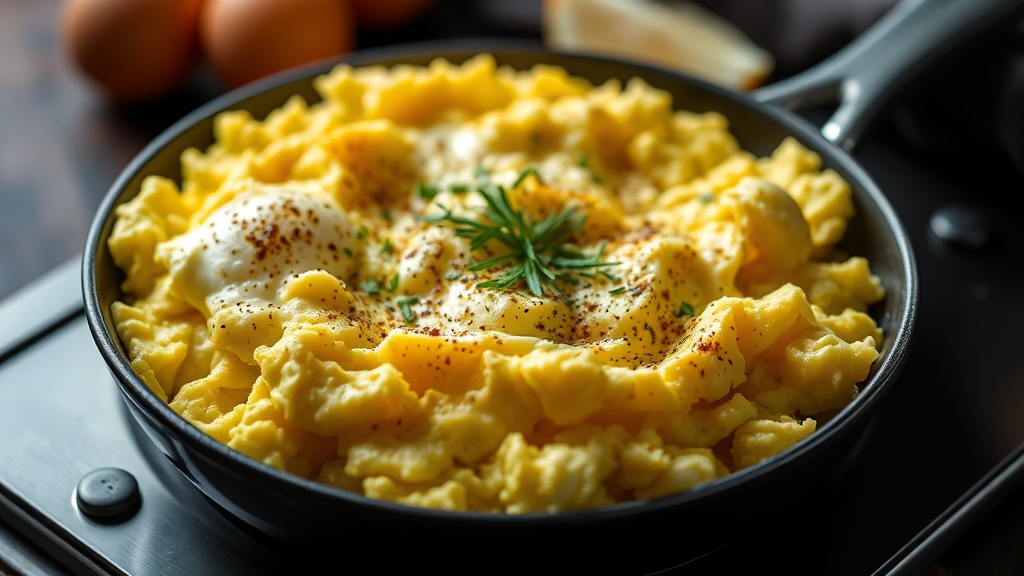
How to Make Perfect Fluffy Scrambled Eggs Every Time

What's the Secret to Fluffy Scrambled Eggs?
The secret lies in low heat, constant gentle stirring, and pulling the eggs off the burner while they're still slightly wet. High heat causes the proteins to seize up fast, turning breakfast into something closer to a rubber disc than a cloud-like pile of eggs. When the temperature stays manageable and the curds form slowly, the texture stays tender and the moisture stays locked inside.
This post covers everything from pan selection and dairy debates to timing, technique, and common mistakes that ruin breakfast. Whether you're cooking for one on a Tuesday morning or feeding a crowd after a trip to Montreal's Jean-Talon Market, these methods will produce scrambled eggs that are soft, creamy, and genuinely worth eating.
What's the Best Pan for Scrambled Eggs?
A well-seasoned cast iron skillet or a quality non-stick pan works best because eggs are delicate and prone to sticking. The goal is even heat distribution without hot spots that scorch one corner while the rest stays raw. A 10-inch pan gives enough surface area for four to six eggs without crowding, which means faster, more even cooking.
Cast iron—like a Lodge 10.25-inch skillet—holds heat beautifully once it's preheated, but it needs a generous coating of fat to keep eggs from gripping the surface. Non-stick, such as an All-Clad HA1 Hard Anodized fry pan, lets you use less butter and makes cleanup almost effortless. Stainless steel (think All-Clad D3) can work too, but only if it's properly preheated and lubricated—otherwise you'll spend breakfast scraping egg residue instead of eating.
| Pan Type | Best For | Pros | Cons |
|---|---|---|---|
| Cast Iron (Lodge) | Rich, buttery eggs | Excellent heat retention; lasts generations | Heavy; needs seasoning and more fat |
| Non-Stick (All-Clad HA1) | Easy weekday breakfasts | Effortless release; easy to clean | Can't use metal utensils; coating wears over time |
| Stainless Steel (All-Clad D3) | Experienced home cooks | Durable; no chemical coatings | Sticks easily without proper technique |
| Carbon Steel (Matfer Bourgeat) | Restaurant-style texture | Lightweight; seasons like cast iron | Requires maintenance; can rust |
Worth noting: the pan should feel comfortable to move. Scrambled eggs demand motion—stirring, tilting, folding—so a pan that's too heavy to lift with one hand will slow you down.
Should You Add Milk, Cream, or Water to Scrambled Eggs?
Dairy is optional, but a small splash of heavy cream or crème fraîche creates a richer, more luxurious texture. Milk thins the eggs out and can make them weep liquid on the plate (not appetizing). Water doesn't add flavor and tends to separate during cooking, leaving pools on the rim of your breakfast plate. If you're after true fluffiness, skip the tap water entirely.
Here's the thing: the debate over dairy comes down to personal preference and tradition. French-style scrambled eggs rarely include any liquid at all—just eggs, butter, and patience. American diner eggs sometimes get a splash of half-and-half for that soft, pale look. For the richest result, add about one teaspoon of heavy cream per egg right at the end of cooking, or fold in a dollop of Vermont Creamery crème fraîche just before serving. That little bit of acidity and fat transforms the whole dish.
Some cooks swear by sour cream, others by Greek yogurt. Both work, though they'll add tang. If the eggs need to stay neutral—say, for a breakfast burrito with salsa—stick to plain heavy cream or nothing at all.
How Do You Keep Scrambled Eggs from Turning Rubbery?
Pull the pan off the heat before the eggs look fully done—they'll continue cooking from residual heat for another minute. This step is called carryover cooking, and it's the difference between custardy curds and something you'd bounce off a wall. The eggs should look slightly underdone when they hit the plate. By the time you grab a fork, they'll be perfect.
The catch? Most home cooks crank the burner too high. Medium-low is the sweet spot. Preheat the pan for a minute or two, melt the butter until it foams (but doesn't brown), then pour in the beaten eggs. Use a silicone spatula—OXO Good Grips makes a solid one—to draw the eggs from the outer edges toward the center, forming soft curds. Don't stir violently. Gentle, deliberate folds create larger, silkier curds. Constant motion prevents any one spot from overcooking.
If the pan starts to feel too hot, lift it off the burner entirely. There's no shame in hovering the pan above the flame while stirring. In fact, some of the best scrambled eggs are made with the pan leaving the heat every twenty to thirty seconds. This method takes a few minutes longer, but the result speaks for itself.
What's the Best Way to Season Scrambled Eggs?
Salt should go in during the whisking stage so it dissolves evenly and seasons the eggs throughout. Waiting until the end leaves you with gritty crystals on top instead of integrated flavor. A small pinch of white pepper adds warmth without visible black flecks (a nice touch if you're serving guests). Fresh chives, finely snipped, bring a mild onion brightness that complements eggs without overpowering them.
That said, restraint is your friend. Eggs are mild—they'll carry other flavors, but they'll also disappear beneath them. A heavy hand with garlic powder or smoked paprika turns breakfast into a spice bomb. Start simple: Maldon sea salt, a grind of white pepper, and maybe a pat of salted butter. Taste before adding anything else.
For a Montreal twist, a tiny shaving of Louis Cyr aged cheddar from a local fromagerie folded in at the last moment gives a savory depth that feels distinctly Quebecois. Just don't overdo it—cheese should accent the eggs, not drown them.
Step-by-Step: The Technique That Works Every Time
- Crack and whisk. Use cold, fresh eggs—Vital Farms pasture-raised eggs are widely available and have deep orange yolks that signal quality. Crack them into a bowl and whisk vigorously until the yolks and whites are completely combined and slightly frothy. No streaks allowed.
- Season early. Add a pinch of fine sea salt now. It helps the eggs stay tender by weakening the protein structure slightly, which actually improves texture.
- Preheat the pan. Set a 10-inch non-stick or cast iron pan over medium-low heat. Let it warm for about ninety seconds. Add one tablespoon of unsalted butter and wait until it melts and just begins to foam.
- Pour and wait. Add the eggs. Let them sit for ten to fifteen seconds—just long enough for the bottom layer to set slightly.
- Stir gently. Use a silicone spatula to slowly push the eggs from the edges toward the center. Tilt the pan to let the liquid egg fill the empty spaces. Repeat this motion continuously.
- Add dairy (optional). When the eggs are about seventy percent set but still glossy, stir in a teaspoon of heavy cream or crème fraîche per egg. This cools the mixture slightly and adds richness.
- Remove early. Take the pan off the heat while the eggs look a little too soft. Keep stirring for another thirty seconds off the burner.
- Plate immediately. Transfer to warm plates. Eggs hold heat but they also keep cooking in the pan. Don't let them sit.
Common Mistakes and How to Avoid Them
Overcrowding the pan is a classic error. Too many eggs in too small a space steams the bottom layer while the top stays liquid. Cook in batches if you're feeding more than three or four people. Another mistake? Walking away. Scrambled eggs demand attention. Leave them for thirty seconds and you'll come back to a dry, browned mess.
Using a metal fork in a non-stick pan isn't just bad for the coating—it's bad for the eggs. Metal scrapes the surface and can leave tiny scratches where proteins grip and burn. Stick to wood or silicone. And pre-sliced cheese? It melts into an oily puddle. If you're adding cheese, grate it fresh. Cabot sharp cheddar or a mild Gruyère melt evenly and taste clean.
Storage matters too. Eggs straight from the fridge work better than room-temperature eggs for this method because cold eggs cook more slowly, giving you a wider margin of error. If you're unsure about freshness, do the float test: place an egg in a glass of water. If it sinks and lies flat, it's good. If it floats, toss it. For more food safety guidance, see the FDA's guidelines on egg safety.
What About Different Styles?
Not everyone wants the same texture. American-style scrambled eggs feature large, fluffy curds with a drier finish. French-style eggs are softer, almost porridge-like, with tiny curds and a flowing consistency. The difference is heat and motion: high heat and less stirring for American eggs; very low heat and constant, rapid stirring for French eggs.
If you're curious about the science behind these differences, Serious Eats breaks down egg protein behavior in detail. For Canadian readers looking for nutrition info and local sourcing tips, Eggs.ca is a solid resource.
Both styles start with the same ingredients. The technique is what separates them. Try both and see which lands on your breakfast table more often. There's no wrong answer—only eggs that are too dry or too raw.
Pairing and Serving Suggestions
Fluffy scrambled eggs deserve more than a cold slice of toast. Serve them with buttered sourdough from Arhoma bakery in Montreal's Hochelaga neighborhood, or a pile of crispy Applewood smoked bacon. A simple side of roasted cherry tomatoes—cooked in the same pan while the eggs rest—adds acidity and color. For a heartier plate, add roasted potatoes seasoned with rosemary and a pinch of smoked paprika.
Don't forget the coffee. Eggs and a dark roast from Café Olimpico make a classic Montreal breakfast pairing. The bitterness cuts through the richness of the butter and cream, balancing the whole meal.
Perfect scrambled eggs aren't complicated. They're a matter of patience, the right pan, and knowing when to stop cooking. Master these basics, and breakfast becomes something worth waking up for.
Steps
- 1
Crack and Whisk the Eggs with a Splash of Dairy
- 2
Cook Low and Slow While Gently Stirring
- 3
Remove from Heat Early and Season to Taste