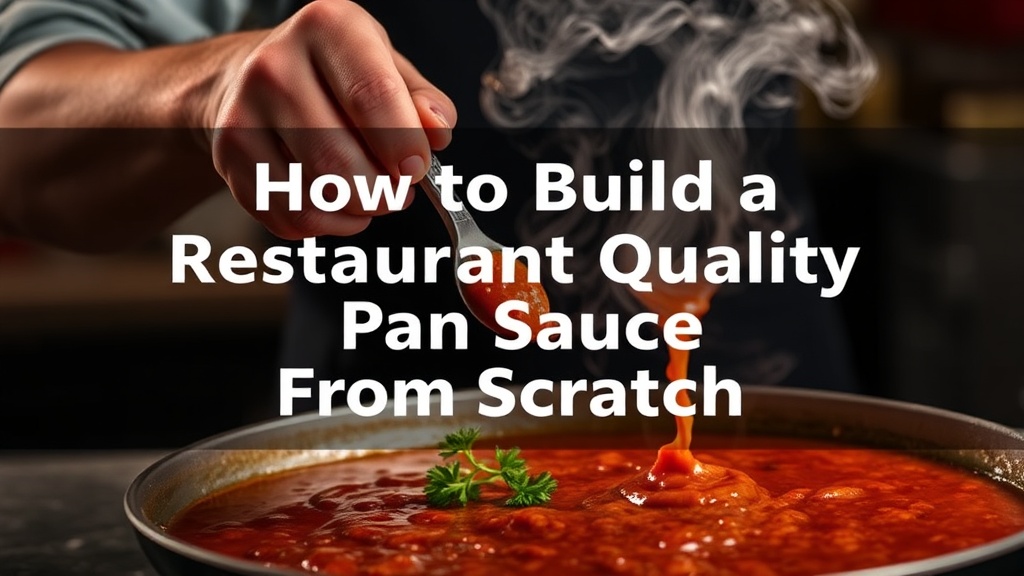
How to Build a Restaurant-Quality Pan Sauce From Scratch

Today you're learning how to turn those stuck-on brown bits in your skillet into a silky, flavorful pan sauce that transforms any simple piece of meat into something you'd pay thirty dollars for at a bistro. No special ingredients required—just the fond left behind after searing, a splash of liquid, and a few minutes of patience. By the end of this, you'll be deglazing like a line cook and finishing sauces with cold butter like it's second nature.
What Exactly Is Fond—and Why Shouldn't You Wash It Away?
That layer of caramelized bits clinging to your pan after searing a steak or chicken thigh? That's fond—and it's liquid gold. Fond (French for "base") forms when proteins and natural sugars in meat undergo the Maillard reaction at high heat, creating complex, deeply savory compounds that stick to the pan surface. It looks burnt. It looks like a cleanup headache waiting to happen. But scrubbing it away means throwing concentrated flavor straight down the drain.
The magic of pan sauce starts with understanding that fond isn't burned—it's transformed. When amino acids and reducing sugars react above 285°F, they create hundreds of flavor compounds that didn't exist in the raw meat. These compounds are water-soluble, which means the right liquid will lift them off the pan and into a sauce. The key is building enough fond without crossing into actual burning, which requires a dry surface, high heat, and patience. Don't crowd your pan, don't move the meat around constantly, and let the proteins develop a proper crust before flipping. If the fond is black and acrid-smelling, you've gone too far. But if it's deep brown and smells like toasted nuts and roasted meat, you're exactly where you need to be.
Your pan choice matters here. Stainless steel is ideal for fond development because you can see the color change happening and it releases fond cleanly when deglazed. Non-stick pans won't build fond effectively—the coating prevents that sticky attachment. Cast iron works but can hide fond color against its dark surface, making it harder to judge doneness. A heavy-bottomed stainless skillet with straight sides is your best friend for pan sauces.
What Liquid Should You Use to Deglaze the Pan?
Here's where personal preference and practical chemistry meet. Deglazing requires liquid—any liquid—but what you choose dramatically affects your final sauce. The alcohol in wine dissolves both water-soluble and fat-soluble flavor compounds, making it particularly effective at capturing everything the fond has to offer. A dry red wine pairs beautifully with beef and lamb, while white wine works with chicken, pork, and fish. Use something you'd actually drink—cooking wine with added salt ruins more sauces than bad technique.
But wine isn't mandatory. Stock works wonderfully, especially homemade chicken or beef stock with good gelatin content (that body translates to sauce silkiness). Even water will deglaze in a pinch, though it adds no flavor of its own. Acid helps balance richness, so a splash of vinegar—sherry, red wine, or apple cider—brightens sauces made with straight stock. For creamy sauces, deglaze with stock first, reduce, then finish with heavy cream or crème fraîche.
The technique is straightforward but requires attention. Remove your cooked meat from the pan and set it aside to rest. Pour off excess fat, leaving about a tablespoon plus all that beautiful fond. Turn the heat to medium-high. Pour in your liquid—it should sizzle aggressively immediately. Now grab a wooden spoon or flat-edged spatula and scrape. Work systematically across the pan surface, dissolving every bit of brown residue. Those bits should release easily. If they're stubborn, your heat might be too low. If the liquid evaporates instantly, your heat is too high. You're looking for a vigorous simmer that gives you thirty seconds to a minute of scraping time before significant reduction occurs.
How Do You Know When Your Pan Sauce Is Ready?
Reduction is where good sauces become great ones. After deglazing, you need to cook off enough liquid to concentrate flavors and achieve proper consistency. But how do you know when to stop? The spoon test never lies: dip a spoon in the sauce, turn it over, and run your finger through the coating on the back. If the line holds cleanly without running, you've reached nappé consistency—the sauce will cling to food instead of pooling on the plate.
Timing varies wildly based on your liquid volume and pan size, but expect three to eight minutes of active bubbling. Stir occasionally, especially as the sauce thickens, to prevent scorching. You're reducing by half at minimum—sometimes two-thirds depending on your starting volume. The sauce should coat a spoon but still flow; too thick and it becomes gloppy, too thin and it won't adhere to your meat.
Professional kitchens finish almost every pan sauce with cold butter—technically called "monter au beurre." This isn't just for richness (though it certainly adds that). Cold butter emulsifies into the reduced liquid, creating a smooth, glossy texture that clings beautifully. Remove your pan from heat entirely. Add one to two tablespoons of cold butter cut into small pieces. Swirl the pan gently until the butter melts completely—don't stir vigorously or you'll break the emulsion. The sauce should look shiny, not greasy. If you see oil separating out, your sauce broke; a splash of cold water whisked in sometimes saves it, but prevention beats repair.
What Are the Common Mistakes to Avoid?
Even experienced home cooks stumble with pan sauces. The most frequent error? Not building enough fond in the first place. If your pan looks almost clean after removing the meat, you won't get concentrated flavor no matter how much you reduce. Next time, use higher heat, dryer meat surfaces (pat them thoroughly with paper towels), and resist the urge to peek or flip too early.
Another classic mistake is adding cold liquid to a screaming hot pan—this causes aggressive splattering and can warp thinner pans over time. Your liquid doesn't need to be room temperature, but straight-from-the-fridge cold creates thermal shock. Worse yet, some cooks deglaze with sweet liquids like juice without balancing the sugar, resulting in a sauce that's cloying rather than savory. If your sauce tastes flat after reduction, it needs acid—a squeeze of lemon juice or splash of vinegar added at the end brightens everything.
Don't forget to taste and season at the end. The fond contains concentrated flavor but also concentrated salt from whatever seasoning hit your meat. Reduce a heavily salted stock and you might end up with something inedible. Start with low-sodium stock or unsalted homemade, then adjust at the finish.
Pan sauce is infinitely adaptable. Build a classic French-style sauce with shallots, white wine, and Dijon mustard. Go Italian with garlic, red wine, and a handful of fresh thyme. Create something Asian-influenced using sake, soy sauce, ginger, and a touch of sesame oil. The technique remains constant—only the flavor profile changes.
For further reading on the science behind fond formation, Serious Eats breaks down the Maillard reaction in exhaustive detail. If you want to explore more pan sauce variations, Bon Appétit offers a master template approach that works with any protein. And for understanding sauce consistency professionally, Cook's Illustrated tested multiple reduction levels to find the sweet spot.