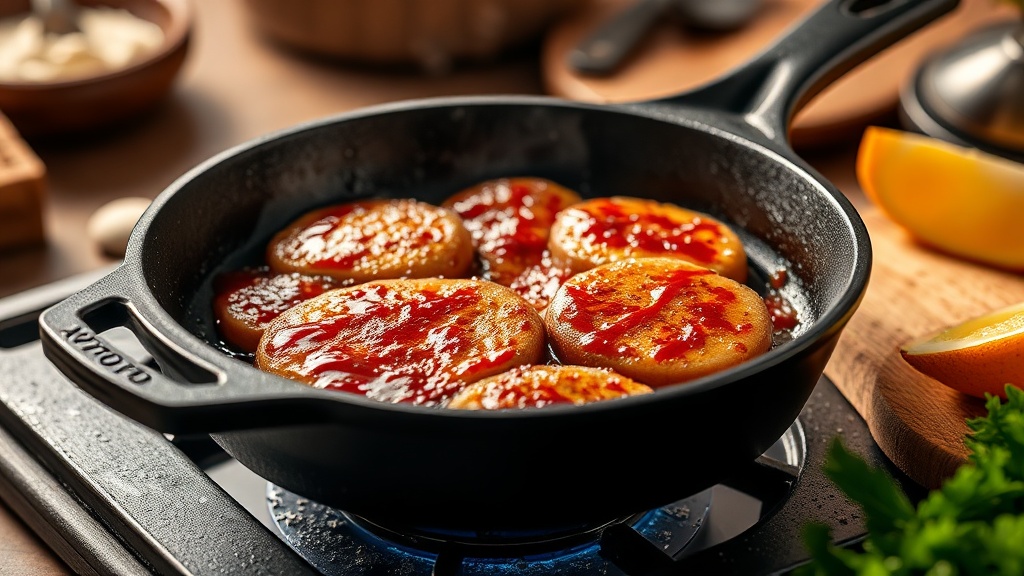
Achieving the Perfect Crisp with Cast Iron Skillet Pan Frying

Imagine standing over a sizzling pan, waiting for that golden-brown crust to form on a piece of salmon or a thick pork chop. You flip the protein, expecting a satisfying crunch, but instead, you find a limp, gray surface that sticks stubbornly to the metal. This isn't just a bad luck streak; it's usually a failure in temperature control or moisture management. Achieving a high-heat sear that results in a crispy, caramelized exterior requires more than just a heavy pan. It requires an understanding of how heat transfers from the iron to the food.
Cast iron is a heavy hitter in the kitchen because of its thermal mass. Once that pan gets hot, it stays hot. However, if you don't respect the physics of the skillet, you'll end up with a burnt exterior and a raw center, or worse, a soggy mess. This guide focuses on the mechanics of heat, fat, and surface tension to ensure your pan-fried proteins always hit the mark.
How do I stop food from sticking to cast iron?
The most common mistake is adding food to a pan that hasn't reached its true cooking temperature. If the oil isn't shimmering or slightly smoking, the protein will bond to the microscopic pores of the iron. This is where the "Leidenfrost effect" (though usually applied to water) comes into play regarding moisture. If your steak or chicken is wet, it won't sear; it will steam. Steam is the enemy of a crisp crust.
To prevent sticking, pat your proteins dry with paper towels until they are bone-dry. Even a tiny bit of surface moisture creates a barrier of steam that prevents the Maillard reaction—the chemical reaction between amino acids and reducing sugars that gives browned food its distinctive flavor. You want direct contact between the hot fat and the protein. A high smoke point oil, like avocado oil or clarified butter (ghee), is your best friend here. According to the Serious Eats, using oils with high smoke points prevents the fat from breaking down and becoming bitter during high-heat searing.
- Preheat the pan: Heat the dry pan first, then add fat, then the food.
- Dry surface: Use paper towels to remove every trace of moisture from the meat.
- Don't crowd: Adding too many pieces at once drops the pan temperature instantly.
What is the best oil for high-heat searing?
Not all fats are created equal. If you use extra virgin olive oil for a high-heat sear, you'll likely smell smoke and taste acrid, burnt bits. You need oils that can withstand the intense heat of a cast iron skillet without decomposing. Avocado oil is a stellar choice because it has a very high smoke point. Ghee, or clarified butter, is another fantastic option if you want that rich, buttery flavor without the risk of the milk solids burning too quickly.
The choice of fat also affects the texture. A fat with a high smoke point allows you to push the heat higher, which is what creates that ultra-crisp exterior. If you're looking for a deep, savory crust, a bit of rendered fat from the protein itself (like bacon fat or duck fat) can be added to the pan once it's hot, but keep the primary cooking oil stable. You can find detailed breakdowns of oil properties on sites like King Arthur Baking to better understand which fats work for which temperatures.
| Oil Type | Smoke Point (Approx) | Best Use |
|---|---|---|
| Avocado Oil | 520°F | High-heat searing, poultry |
| Ghee (Clarified Butter) | 485°F | Steaks, rich crusts |
| Canola Oil | 400°F | General frying, moderate heat |
| Extra Virgin Olive Oil | 375°F | Low-heat cooking, finishing |
How long should I let the meat rest in the pan?
One of the biggest errors is the "premature flip." Many cooks flip their food too early because they're afraid it's burning. In reality, if the food is sticking, it's actually a good sign—it means the crust hasn't fully formed yet. Once the protein has developed a sufficient crust, it will naturally release from the pan. If you try to force a flip, you'll tear the crust and lose that texture you worked so hard for.
Be patient. Let the pan do the work. If you're searing a steak, wait until you see the color change climb halfway up the side of the meat before you even think about touching it with your tongs. This patience ensures the heat has penetrated the outer layers effectively. Once the crust is set, the meat will lift easily. If it resists, give it another minute. The heat is your tool, not your enemy.
Temperature management is also about the heat source. If you notice the oil is smoking excessively and turning a dark, unappealing color, turn the heat down slightly. You want a steady, controlled heat. A constant flame is better than a fluctuating one. If the heat is too low, you'll end up with a greasy, limp exterior rather than a crisp one. If it's too high, you'll have a charred exterior and a raw interior. It's a fine line, but once you find the sweet spot, you'll never go back to non-stick pans for your proteins.